 |
| Blog |
 |
| Archive |
|
|
|
|
| Blog |
| To find an archived article, simply click on Index and scroll the subject titles, or do a Ctrl-F search |
TALLRITE BLOG
You can write to me at blog2-at-tallrite-dot-com |
||||||||||||||||||||||||||||||||||||||||||||||||||||||||||||||||||||||||||||||||
| January 2005 | ||||||||||||||||||||||||||||||||||||||||||||||||||||||||||||||||||||||||||||||||
|
||||||||||||||||||||||||||||||||||||||||||||||||||||||||||||||||||||||||||||||||
|
ISSUE #93 - 30th January 2005 [261+ 204 = 465]
|
||||||||||||||||||||||||||||||||||||||||||||||||||||||||||||||||||||||||||||||||
|
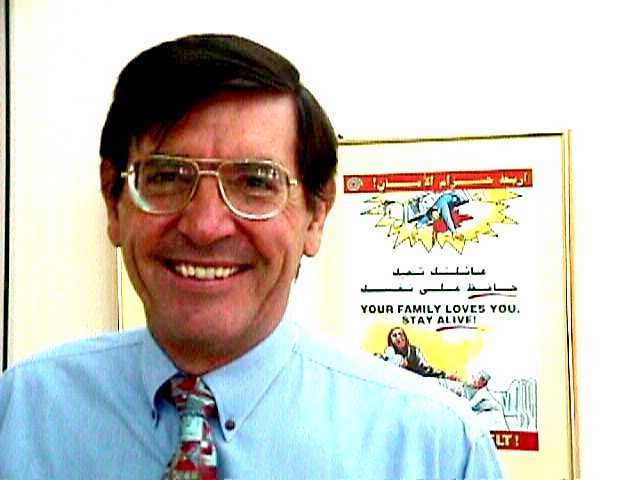
Abdul Ameer Kadhum : A True Iraqi Hero and Patriot
©AP From the (subscription-only) Irish Times |
||||||||||||||||||||||||||||||||||||||||||||||||||||||||||||||||||||||||||||||||
|
Trade Aid for Democracy in Africa Britain's Tony Blair and Gordon Brown are in a competition to see who is the more caring about global warming and third world (read, African) poverty and disease. Mr Blair keeps trying to trump Mr Brown's efforts, whether by scheduling a press conference to coincide with a Brown speech, or, more recently, inserting himself ahead of Mr Brown at the Davos World Economic Forum. In the latter case, his argument for anti-global warming measures such as Kyoto centres around a growing consensus that climate change is being caused by man's activity and therefore man should take action. But he makes no case that Kyoto, or any other measure, represents the optimal use of money if the welfare of humans is your primary concern. Kyoto , as I've often noted, is hugely expensive for a negligible benefit, so most certainly represents bad value for (other people's) money. Aided and abetted by Bono the Clown, he makes a better fist of African poverty and AIDS, calling for the doubling of international aid and 100% debt relief. But he also goes one about partnering with African governments while helping them build democratic institutions and defeat corruption. I must say, that's where he loses me. Doubling aid and partnering (most) African governments is a familiar recipe for the evaporation of money. No CEO would hand over budget money to a department head without confidence that he will not deliberately squander or sequester it. So why should aid money be treated with any more laxity? The underlying cause of poverty in Africa is not lack of inherent ability to create wealth; it is corruption at the top. If you doubt this, why would you think Britain, France and co were so keen to colonise Africa in the nineteenth century? For fun? To “civilise” the natives? To introduce Christianity? Well there might have been elements of all those things. But the primary reason was simply to get rich. Africa was - and remains - immensely wealthy in both natural resources and human resources. Put the two together, get organized and fat profits were - and still are - to be made. This observation is no endorsement of the ethics of colonialism. Yet it is undeniable that Africa's downward economic slide nevertheless began with the departure of the colonialists in the 1960s and their replacement with local leaders, such as the likes of Idi Amin of Uganda, Mobutu Sese Seku of Zaire, Robert Mugabe of Zimbabwe, Omar Bashir of Sudan, who made/make it their business not to govern wisely but to steal as much money as possible for themselves, their families and their cronies. And sadly, with some noble exceptions such as South Africa, Madagascar and Botswana, this style of leadership is still the norm in Africa today. As a result, any aid channelled through such governments is going to be siphoned off. The only question is the smallness of the percentage that will remain. I do a bit of teaching on how to manage safety, and perhaps the strongest point I make is the power of management commitment. In any organization, people watch and copy what the top man is doing. So if he demonstrates his commitment to something good, be it safety or financial integrity, this message will be picked up and emulated. As will the converse. And thus, when the top man is corrupt, as was for instance Nigeria's erstwhile President Sani Abacha (or, closer to home Ireland's 1980s Prime Minister Charles Haughey), everyone, not just within the government but within the populace at large, sees corruption as a more normal way of conducting everyday life. Corruption quickly gets embedded. And in Africa it continues to this day to suck the lifeblood out of most of its nations, not only by diverting money away from productive uses, but in deterring the local and foreign investment that could otherwise let the continent soar. It is encouraging that 62 major corporations - such as ABB, Petrobras, Rio Tinto - committed themselves at the just-concluded World Economic Forum in Davos to a “Zero-Tolerance Policy to Combat Corruption and Bribery”. This is certainly laudable, but is aimed at fighting corruption amongst and by businesses themselves (eg paying kickbacks for contracts). But unless and until a country's top politician, ie its executive president, commits himself to eliminating corruption, the actions of well-meaning, honest businesses will never be enough. They are not high enough in the pyramid. So in my view, the aid-giving, debt-forgiving countries of the west should pipe in their well-meaning bounty to Africa in either or both of two ways.
For the ultimate defense against corruption is democracy. A fully functioning democratic system is able to detect and expose the corrupt rascals and constrain or replace them. Which is why that same now-elderly Mr Haughey is living out an unhappy retirement in disgrace and Ray Burke, one of his corrupt ministers, went to jail for tax fraud last week. Without democracy, the corrupt rule happily on and on until they die in bed (like Malawi's Hastings Banda) or are deposed (Mobutu). Democracy is indeed the panacea of all the world's ills (just watch how Iraq progresses in the next couple of years). Messrs Blair and Brown would do well to get over their little tiff and reflect on this before they start spraying Africa with their taxpayers' hard-earned money. They and other Western leaders should adopt a slogan such as “Trade Aid for Democracy in Africa”.
Last week, large swathes of the world remembered and prayed for the souls of the victims of Nazi extermination in Auschwitz. I cannot add to what has been said and shown in the media. But I came across the handwritten confession statement of Rudolf Hoess, the camp commandant, explaining in dispassionate detail precisely what happened in that death-camp. After the war, Hoess was deservedly hanged at, appropriately, Auschwitz itself, no doubt largely on the evidence of this signed document. To quote just two chilling sentences from the google translation,
Click below to see the entire horrifying translation, of which I recommend you read all 850 words.
Why Are Palestinian Refugees Still Refugees? I first came across Raymond Deane, chairman of the Ireland Palestine Solidarity Campaign, a year ago and wrote a post about a presentation of his that I attended. Since then I've had a number of frosty exchanges with him in newspaper letters pages, for example challenging him to name any non-Israel Middle Eastern state with any democratic legitimacy whatsoever, from universal suffrage to a free press to an independent supreme court. (He hasn't done so, though arguably Afghanistan, the Palestinian Authority and Iraq now qualify). The spat continued last week in the (subscription-only) Irish Times. Amongst other half-truths, he repeated the now-familiar meme that Jewish people returned to Palestine “after almost 2,000 years, to a country that happens to be inhabited by another people”. In other words they grabbed the land from the Palestinian natives and displaced them. This is untrue, which my published reply to him spelled out in these terms.
My letter elicited some fury, manifested in strange anonymous phone calls, the first time this has happened. A particular source of ire is my remark that the Arabs would have massacred the Jews if they had won the 1947/48 war. The remark is based
Up to now, no-one has refuted the facts as presented in my evidently controversial letter, inconvenient as they may be for some. And for the record, according to the universally-respected (Jewish) historian Benny Morris, between 1880 and 1930 the Jews actually bought most of the barely-populated land that is now Israel; they didn't steal it. The eager sellers were mainly absentee landlords and real-estate speculators living in Beirut and Damascus, who couldn't believe their luck at getting hard cash for worthless, near-empty scrubland and desert. The refugees didn't have to be consigned to refugee camps for the next almost sixty years. Other examples of refugees being absorbed and integrated into other countries include
But so long as the the Arab world continues to duck the question “Why are Palestinian refugees still refugees?”, their situation will remain miserable. Even if - as Israel's then Prime Minister Ehud Barak proposed at Camp David in 2000 - they are paid compensation in lieu of returning to Israel, most of them will remain stateless unless other Arabs show them compassion. Late
Note: Blogger Toirtop
Some things you feel guilty about calling “fun”. That goes for the arresting ad for a Volkswagen Polo that hit the internet last week, and also some news bulletins. It depicts a suicide-bomber in an Arafat-style kefiyah who drives his Polo to a London restaurant, stops outside it and then detonates himself. Only thing - the “small but tough” Polo is able to contain the explosion so no-one except the bomber is harmed - and presumably the interior decor and inbuilt CD player. The closed windows don't even crack, the car doesn't even rock. Anyway, the ad turned out to be bogus, made by a couple of anonymous individuals known only as “Lee” and “Dan”, for either £400 or £40,000 depending on whom you believe. Poor Volkswagen. They seemed torn by
Eventually the spoilsports decided to sue the elusive “Lee” and “Dan” ... if only they could first locate them. VW's energies might be better spent marketing the “small but tough” Polo to beleaguered American troops in Iraq.
Ah the wonders of the Freedom of
Information Act. Thanks to
it, we have recently learnt
that a major source of, er, irritation in British embassies across the
dying embers of the British Empire was the crispiness of the ambassadorial
toilet paper when vigorously applied against the diplomatic extremity.
It all started in 1963 when John Hunt, a Harley Street doctor, wrote to his friend Dr Cornelius Medvei, describing statesmanly piles suffered by one his patients, an ambassador, who blamed the shiny toilet paper issued by Her Majesty. Dr Medvei was medical adviser to the Treasury, so probably not the best man to approach. Nevertheless, long years of unrelieved research with
copious bumf followed, which concluded that that the crackly stuff should
be retained. Not only was
soft paper “distinctly more pervious [yuk] to infections such
as dysentery” , but more to the point it was quadruple the cost.
Undaunted, the ladies in the typing pool then joined the chorus for
softer, puppy-dog material, citing “damage to our delicate parts”,
and so did the unions and even the British Standards Institute (which, one
would have thought, was devoid of delicate parts). So at last, many further years later, HM’s
Stationery Office – the same which provides the distinctly hard and
uncomfortable headed and embossed parchment so beloved of other parts of
the diplomatic corps – was softened up enough to relent.
But only because by 1981 the squishy stuff had become cheaper than
the hard. No doubt had last week’s bogside row in a Dublin
pub occurred in the British Foreign Office, another eighteen years of
research and protests would have ensued. It seems that to conform with the law that disabled people should be properly catered for, the Mezz bar installed a disabled toilet, featuring a red door with a gold wheelchair sign. Only thing, the door always seemed to be locked, supposedly for renovations. But when eventually unlocked it revealed … a brick wall. There was no privy at all, disabled or otherwise, nothing at all. Peter Wickham the manager, keeping an admirably
straight face, said he had no idea about the bogus bog and blamed the
owner. But should wheelchair users be caught short, he said there
was a genuine disabled toilet at the bottom of the stairs. So that’s all right then. Finally, we come (thanks to Eileen) to the final item on this week's lavatorial theme - which evidently interests you or you wouldn't have read this far. View this video clip to learn how elephants actually use flushing porcelain in Chiang Mai, Thailand. Now can we please change the subject.
Quote : “To finance research into a vaccine, develop prevention campaigns and remove the remaining obstacles to access to care for HIV/AIDS, we need to mobilise at least ten billion dollars per year, instead of six, as is the case at present ... Alternative possibilities for raising the necessary revenue include an extra tax on airline and shipping fuel and a small levy on all airline tickets sold throughout the world.” French
President, Jacques Chiraq, Quote : “They gave to their children an irrational hatred of Jews, in the same way that people in Northern Ireland transmitted to their children an irrational and outrageous hatred for example of Catholics, in the same way people give to their children an outrageous and irrational hatred of those who are of a different colour.” Ireland's
President Mary McAleese, At her second attempt two days later, she apologised profusely. Quote : “In the case of [Deputy] Ray Burke, I see a much more sinister development: the persistent hounding of an honourable man to resign his important position on the basis of innuendo and unproven allegations.” Irish Prime Minister Bertie Ahern in 1997, Quote : “No
I do not [think the
murder of Jean McConville was a crime].” Mitchel
McLaughlin, president of Sinn Fein, The Catholic
widowed mother of ten young children in Belfast,
|
||||||||||||||||||||||||||||||||||||||||||||||||||||||||||||||||||||||||||||||||
| See the Archive and Blogroll at top left and right, for your convenience | ||||||||||||||||||||||||||||||||||||||||||||||||||||||||||||||||||||||||||||||||
|
ISSUE #92 - 16th January 2005 [238+190=428]
|
||||||||||||||||||||||||||||||||||||||||||||||||||||||||||||||||||||||||||||||||
|
Mummy to the Rescue With one plea-bargain, he was
free. Sir Mark Thatcher, possessed of
an unearned hereditary baronetcy which his mother – with an eye to her
son – had engineered for his father Denis, the first such hereditary
honour awarded in some some 60 years**, pleaded guilty to involvement in that Equatorial Guinea coup
attempt. In so doing, he was fined the equivalent of €385,000
(small change since he’s in the hundreds of millions league, though
they’re of questionable provenance) and
sentenced to four years, conveniently suspended. And crucially he was
allowed to flee South Africa – which he did within hours – and to
escape not only extradition to Equatorial Guinea but even “friendly”
interrogation by its investigators.
Our sentence would not have been suspended and we would even now
been helping some robust EQ interrogators with their enquiries within the confines of
its notorious Evinayong prison where Sir Mark's erstwhile
co-conspirator South African Marc du Toit is serving 34 miserable years.
Or perhaps we would have found ourselves in Zimbabwe's Chikurubi
maximum-security prison keeping company with Sir Mark’s pal Simon Mann (whom he implicated further),
currently serving seven years. How we would be
longing to exchange our EQ interviews for bit of American torture at Abu
Ghraib.
Most countries have laws which prohibit private citizens from plotting the overthrow of foreign regimes. But does this make such actions intrinsically wrong? I would say a coup d’état is intrinsically wrong only if the regime in question is legitimate.
As a result, though on paper EQ's economy is the world's fastest, growing at 65% pa, and its per-capita income exceeds Saudi Arabia's, its people are actually among the Earth's poorest. Thus, he has no legitimacy whatsoever and in my opinion, from an ethical point of view, is fair game for any tin-pot mercenary (like Mr du Toit or Sir Mark) who wants to chance his arm.
So
a coup will have no downside but very real potential for some upside. The real reason a country - any country - ensures it has strong anti-foreign-coup legislation is not because it cares about protecting foreign regimes. It’s because it wants to suppress any inklings of a coup mentality either at home or abroad lest – horror – such urges one day be deployed against itself. There’s not much chance of this happening in established
democracies like New Zealand, but the less legitimate a country’s
government the more likely a coup, if that’s the only way you can get rid
of the incumbent rascals. So coups aren’t necessarily wrong.
But what is wrong is to let prominent people escape the laws of
their democratic country of residence just because of Mummy.
“Unethical”and
Anti-“Unethical” Industries By common consent, if not
reason, several legitimate industries are often scornfully labelled as “unethical”,
such as those of oil, arms, drink, tobacco, pharmaceuticals, because their
products can result in environmental damage and/or death (or, in the case
of pharmaceuticals, lack of avoidance of death).
Some, such as fast-food which can be ruinous to health, are
regarded as marginal. Strangely,
manufacturers of things like motorbikes, kitchen knives, baseball bats and
gas-ovens are exempt despite the injuries and deaths caused by such
products. Equally strangely,
those who freely purchase and use the products of the “unethical”
industries are not so labelled themselves.
Those who consider certain
products to be harmful, and thus their producers unethical, put a lot of
effort and brainpower into presenting their case and encouraging others to
support them. Organizations,
such as Greenpeace,
evolve around promoting specific goals, in their case environmentalism.
Some become multinational businesses in their own right, with large
staff and offices, dependent on continuing donations to fund their
existence, further growth and employee pension plans.
At the other end of the scale are looser arrangements of
well-meaning, committed individuals who do not however make their cause
into a full-time occupation. In parallel, the “unethical”
industries have had to find ways to defend themselves, their products,
their markets. They have done
this both by putting up direct public defences, typically through
advertising campaigns and direct approaches to their distributors and
end-users, but also by funding outside groups, often formed by their
retailers and customers, who put out favourable viewpoints.
The industries have, of course, also responded to the critics by
making improvements to their products, practices and openness, driven by
the criticisms. This kind of debate and the
action it fosters are very healthy in a democratic society.
Both attitudes are hogwash in
their simplicity and dishonest in the behaviour they induce.
As I’ve often remarked, motivations in human (as distinct from religious) life are irrelevant; we should direct our gaze and our judgements not at intent but at actions and results. So, science put out by the “unethical” industries, or proposals to improve the behaviour of themselves or their customers, should be scrutinized solely on the basis of merit, not dismissed because of the interests of the industry. But this is often not done. Shell was disparaged by the environmental industry and forced to reverse its thoroughly researched plan to dispose of its Brent Spar storage and loading platform by sinking it in the mid-Atlantic. Only later did the environmentalists admit that Shell had done its science properly and that any environmental harm resulting from the mid-Atlantic option was minimal. It is similarly vilified for “unethical” behaviour in Nigeria, allegedly including
The instantly-dismissed truth,
however, from my own personal experience, is very different (disclosure
– I worked 30 years for Shell, seven of them in Nigeria, whilst the
supposed misbehaviour was taking place). I’ll write about it in a future blog. But just as the defences of the “unethical” industries should be examined solely on their merits, so the assertions of the anti-“unethical”-industry groups should be subjected to the same dispassionate scrutiny. There are countless examples of misleading statements put out by, for instance, environmental lobbies. Perhaps the biggest is that the Kyoto Protocol will (at a ginormous cost proponents prefer not to talk about) cause a significant reduction in global warming, when the accepted science says it will only defer it by six years in a century’s time (see last week's post). Moreover, the antis themselves
constitute an industry in their own right.
They organize themselves into groups, strive to have
highly-motivated participants, generally have a hierarchical structure
(someone’s got to be in charge), have a central cause (a “product”),
spend money to promote that cause, collect funds and/or free (volunteer)
labour, seek constant growth in size and spread, and put together budgets.
So in
effect you have two sets of industries battling it out, each with its own
motivation and objectives, each tempted to distort the truth to suit its
own agenda. In the debate in Ireland on how to deal with excess and binge drinking, I was reminded of all this recently by a letter to the Irish Times from an eminent psychiatrist attacking a pro-drinks organization called MEAS (Mature Enjoyment of Alcohol in Society). In trying to parry moves to impose draconian anti-drinks measures such as a total ban on advertising, MEAS proposes instead that, amongst other things a message about “drinking in moderation” should be pushed out. The doctor’s response was that since MEAS receives funding from drinks companies, its ideas are not even to be listened to and so he simply ignores their arguments. But he gives the game away by advertising himself as chairman of a “substance misuse faculty” and “consultant addiction psychiatrist”. He is clearly a member of the anti-drinks industry, and good luck to him. But if he won’t even address MEAS’s suggestions, why should anything he says be taken at face value anyway? You can find his letter and my (published) response here. Make up your own mind. What’s the mystery about
debating actual issues rather than which industry or anti-industry pays
for them?
To answer Irish Eagle's comment ...
At least Russia’s
President
Vladimir Putin had a reason for destroying and renationalising the huge
oil company Yukos : he wants to increase his own financial powerbase while
restraining the pesky political ambitions of Yukos’ erstwhile CEO Mikhail
Khodorkovsky, whom he’s had jailed.
Here in Ireland, the Prime
Ministers Bertie Ahern is destroying the state airline Aer Lingus, but for no
discernable reason. Back in 2001,
Aer Lingus was losing €140
million per year, smitten by 9/11, SARS,
competition from Ryanair and other factors.
A new CEO was appointed – Willie Walsh, a young, dynamic
ex-pilot, well liked and respected within the organization – with a
mandate to turn the company round. (Incidentally,
his contract contained no provision to prevent him competing against AL
within any specified period of future departure, an early sign of
carelessness.) He at once instituted radical
changes, in the teeth of union opposition and with but the faintest
support from his Government shareholder.
He
Passenger numbers and
load-factors soared and by 2003/04, AL’s deficit had become a profit of €69m
(2003) and €83m
(2004). But he had not finished.
Either AL must continue to improve its overall performance or it
will slip back again and be submerged by its competitors.
He reckoned AL was still well
behind Ryanair in terms of unit costs and thus wanted to make another
1,300 staff redundant and implement other cuts.
He also wanted to introduce
Ryanair-style low-fare routes across the Atlantic, for which there is
virtually no competition and for which AL already has the infrastructure.
And AL’s ageing fleet needs to
be replaced with modern, fuel-efficient aircraft, which needs a thumping €1
billion of new investment. As a means of raising the cash,
he proposed that AL be privatised, in whole or part, and indicated that he
would be willing to mount a management buyout.
At this point complacency and
horror and hypocrisy rose up.
Mr Walsh was told his plan was
unacceptable (especially the MBO bit) and that building
hospitals was more important than buying planes.
Once he realised that he could therefore not fulfil his original
mandate, he and two of his fellow directors resigned with six months
notice, to be effective in May 2005.
When it then emerged this month
that the three men planned to start their own low-cost trans-Atlantic
airline, implementing the very plan that the government had rejected for
AL, Bertie Ahern had them peremptorily kicked out of their jobs in
two weeks, without up to then having even advertised for replacements.
So the stage has now been set
for the new “WillieWalshair” to upstage AL. It will
not only steal
its Atlantic passengers, but also no doubt many of its better managers, flight
crew and cabin staff - those who are more interested in joining a feisty new airline
with a future rather than remaining with a deadbeat, state-run,
union-dominated, no-longer-competitive minilith. Meanwhile, what competent
executive is going to want the poisoned AL chalice given its continuing
sabotage by the state ? And,
to misquote Groucho Marx, does AL really want to hire anyone who would want such a
job? The coming auto-destruction of
Aer Lingus is entirely the result of Bertie’s laziness, fear of the
unions, lack of vision and general disinterest in the airline.
Nobody ever accused President Putin of disinterest in Yukos –
quite the reverse. And if you ever get a chance to
invest in WillieWalshair, I suggest you grab it.
The Traveling Bra Salesman’s Lesson Every year, Shell and the Economist get together and offer a prize for an essay around a topical theme : 2004’s theme was “Import workers or export jobs?”. It was won by Claudia O'Keefe from Frankford, West
Virginia, USA, with her thoughtful, intriguingly-titled submission, “The
Traveling Bra Salesman’s Lesson”. Having
suffered from successive economic downturn, the author seems to be
almost penniless so the prize of $20,000 will no doubt be very welcome. Drawing on personal experience, she muses on the disappearance of well-paid jobs in America as they migrate overseas to people who get paid a fraction, and the fate of the American workers left behind, invariably to do lower-paid jobs than before. This is happening amid fierce political debates on outsourcing and immigration and raging frustration on the part of the displaced American workers, many of whom are highly skilled yet in areas (such as bra salesmanship) for which there is no longer a home market. She
concludes that it
is not The American Dream we should seek, but The Global Dream.
Let go the past and re-invent a new future. It's well worth reading the six-page essay. You can access it here (pdf, 29 kb). Don't bother with the other winners. (Wish
I could get away with plagiarising it as a post of my own making!)
Quote
: “There
is nothing that you could ever say to me now that I could ever believe.” Chancellor Gordon Brown to
prime minister Tony Blair, Mr Blair said
flatly that Mr Brown never said this to him, Quote
: “The
IRA are not criminals, never were criminals, and in my opinion never will
be criminals.” Sinn
Fein’s Martin McGuinness, See also Bertie Ahern's quote of last week. Quote
(subscription only) : “Sunday's
election was a sham, aided and abetted by Western diplomacy. As with
apartheid, Western citizens must, by imposing a popular boycott on Israel,
lead our governments to a better policy.” James
Bowen, a university professor in Cork How
the Left hates elections when they are free and fair. Quote : “There is no doubt that the number of customers is down. In some pubs they are down by a third and in others by a quarter. Instead of investing their money in sensible things like nights out and drinking, they are squandering [it] on mortgages and children’s education.” James
Boyle, owner of Harry’s Bar in Dublin,
Tsunami Victim - Lost Identity
A victim of the Indian Ocean tsunami, she is in hospital in Phuket, Thailand, and does not remember anything or know who she is. Therefore, her family cannot be contacted. If you think you know her, please
If you know others who you think might be able to help in the search, please give them the permalink of this post.
|
||||||||||||||||||||||||||||||||||||||||||||||||||||||||||||||||||||||||||||||||
| See the Archive and Blogroll at top left and right, for your convenience | ||||||||||||||||||||||||||||||||||||||||||||||||||||||||||||||||||||||||||||||||
|
ISSUE #91 - 9th January 2005 [158]
|
||||||||||||||||||||||||||||||||||||||||||||||||||||||||||||||||||||||||||||||||
|
Lip Service and Inaction for Kyoto The Kyoto Protocol, having obtained ratification from the required 123 countries and emitters of 55% of the world's greenhouse gases, will come into force on 16th February 2005. It will require participants (which exclude all developing countries including mega-polluters China, India and Indonesia) to reduce their emissions by around 8% relative to what they were in 1990, with a deadline of 2012. With the Protocol having been signed and ratified largely under the philosophy of “act now, think later”, a number of governments have recently begun to realise that it is going to cause them some pain. Many countries are exceeding their carbons emission limits and will continue to do so unless they take action. That action includes things like :
Whichever way you look at it, Kyoto is going to be very unpopular politically, because it will cost a great deal of money, as well as jobs (both the discontinued factories and other businesses killed by the carbon tax). The (subscription-only) Irish Times tells us that little Ireland expects to be spending around €200 million per year just on buying CO2 credits. The international experts estimate that the global cost of compliance will be a recurring US$100 billion per year [Ref 1]. The public debate about Kyoto is all to do with three assumptions about global warming :
that man can significantly reduce global warming by cutting back on greenhouse gas emissions, for which the scientific evidence is particularly scant, and indeed even Greenpeace and Friends of the Earth admit that Kyoto will have but a marginal effect. As I pointed out in the very first issue of my blog, that marginal effect is that Kyoto will merely defer a 1.9ºC global temperature rise from the year 2094 to the year 2100 [Ref 2, 3, 4]. To help close off discussion of inconvenient facts like this, pro-Kyotoites frequently cite their anger at the hated George Bush's refusal to ratify Kyoto, conveniently forgetting that his predecessor and the Senate unanimously rejected it as well. The reason they did so was simply the Protocol's cost and ineffectiveness, and this hasn't changed. Indeed, even if the science under A and B above were rock-solid, which it isn't, a scheme that absorbs $100 billion a year for almost a century in exchange for a piffling six-year deferral is an outrageous misappropriation of money. Were such vast sums are waiting to be disbursed, there is a huge array of uses for it more beneficial to humanity. For instance, Kofi Annan and the World Bank have said that $200 billion would provide every human being on earth with clean drinking water and sanitation, which would avoid two million third-world deaths a year [Refs 5, 6]. Ask a subsistence farmer whether he wants clean water today or the promise of a six-year global-warming deferral for his great-grandchildren, and you already know his answer. The thing about Kyoto is that it is designed more to make rich people feel good about themselves than to solve an actual problem. This phenomenon is not new.
As I've argued previously, people and their actions should be judged not on their intentions (which are irrelevant) but their outcomes. On this basis, Kyoto should be shot down at once. But since of course, the rich world is simply not going to cough up an endless $100 billion a year or anything like it, for Kyoto or anything else, in the end, Kyoto is doomed anyway. Common sense, commerce and the desire of politicians to remain in office are what will strangle it. But we can expect in the meantime an awful lot of hubris, hot air, wonderful intentions, lip-service and inaction.
The Gates/Bono Proposals for 2005 Microsoft's Bill Gates and U2's Bono got an interesting article published in several newspapers in the first few days of January, aimed at galvanising a step-change improvement in the prospects of the world's poor at a time when our TV screens were full of images of suffering in south Asia. Such a change, for which the technology and money now indubitably exist, would be comparable with the abolition of slavery (in most of the world), the defeat of Soviet Communism and the end of South African apartheid. For what they're worth, here are my comments on their four-point plan.
That said, the authors are good at getting the attention of world leaders, and (much as I can't stand Bono) they should be lauded for their efforts to make 2005 a transformative year of action for the poor.
Palestinians Have Reason for Hope It is ironic that the only three entities in the Middle East that are holding free elections are those under foreign, non-Islamic domination. Afghanistan and Iraq under the American occupation, the Palestinians under, effectively, the Israelis. Nevertheless, that they're happening at all, notwithstanding the security issues, is a sign for hope in the future. The ballot that astonishes me the most is the upcoming one for the presidency of the Palestinian Authority. It's two in the eye for the late unlamented Yasser Arafat.
Abu Mazen, born in 1935 as Mahmoud Abbas, is an undoubted Palestinian nationalist, who wants the Jews out, who wants a second Palestinian state (after Jordan) and who has a track record of virulent anti-Israelism. Yet he is hugely different from most other Palestinian leaders in one vital respect. He uses his brain. And his brain long ago told him some basic, if distasteful, truths.
This means that if he is elected, as seems likely, and if he is able to restrain the madmen addicted to suicide bombs, AK-47s and mortars regardless of effect, he will be a formidable foe indeed. For by using exclusively diplomatic channels, negotiation and international public opinion to advance the Palestinian cause, he will effectively disarm Ariel Sharon and force or embarrass him into negotiating on an equal footing, egged on by his allies in America and elsewhere. Israel will not fight militarily if not attacked, and if not attacked it can no longer assume the moral high ground. Nevertheless, though they don't like him they can see that Abu Masen is a man you can do business with, just as Margaret Thatcher famously recognised similar qualities in the Soviet dictator Mikhail Gorbachev. And if Abu Mazen's brain is still functioning, he will be smart enough to recognize a good deal when he sees one and to grab it, even though it undoubtedly will involve much unpalatable compromise. This is in complete contrast to his vainglorious predecessor at Camp David in 2000, whose only concern was to remain an icon and a war-leader, however disastrous for his people. For this reason, Arafat never concluded the excellent deal that was available. Twenty months ago, I called Abu Mazen the Palestinians' Great Hope, then had to retract. Can he become so again? Time will tell. Meanwhile, there is an election to win, which involves a kind of dance macabre.
Maybe Abu Mazen will indeed be able to deliver to the Palestinians a future which allows them to devote all their energies to making money and looking after their families. He is once more their great hope.
It's so rare these days for anyone to dare defend imperialism that it is most refreshing and thought-provoking when it is done properly. Last week in a BBC interview, historian Andrew Roberts defended the British Empire as an unmitigated force for good, adding for spice that this was in marked contrast to the German, French and Belgian Empires. In delicious political incorrectness, he pointed out how the British had
He said that Africa had enjoyed its longest period in its history of peace and justice during the British Empire period than it had seen before or since. The interview was in held in response to South African President Thabo Mbeki's New Year's Day castigation in Sudan of Winston Churchill, calling him a racist who “ravaged Africa and blighted its post-colonial development”. Mr Roberts retorts that Churchill did indeed view coloured people as being on a “lower hierarchical scale” (nice euphemism!), as did all other whites at the time, but that this prompted the British imperialists to increase not decrease their efforts to improve the Africans' lot. Moreover, Mr Mbeki should in fact be thanking Churchill for stoutly resisting, during the Boer War, the very boers/Afrikaners who later created apartheid. The sneers of the BBC interviewer makes the three-minute discussion all the more entertaining, whether you agree with Mr Roberts' arguments or not. Listen to it here.
Ignorance and Prejudice in 2004/5 I knew I shouldn't have done it, but this time last year I made a few predictions, based, as I said at the time, on “ignorance and prejudice”. Ah well, here to give you a laugh is my scorecard, with a total mark of just 31%. The main thing I got right was the i+p. So I'm laying off the predictions business for 2005. But I can promise continued i+p, both ill-informed and objectionable.
Quote : “I think this is the worst holiday I have ever had, and hopefully ever will have.” 11-year-old
British girl Alexa Cole, Quote : . “If nations are poor, if they don't see hope, if they're riddled by disease, if no one is helping them, then radicalism takes over. They lose faith in democracy, and they start turning in other directions. This is an investment not only in the welfare of these people, which in and of itself is a good thing to do; it's an investment in our own national security.” US outgoing
Secretry of State Colin Powell, Quote : “Demand a better deal for the poor of the world in 2005.” Bill Gates, chairman of Microsoft and Quote : “We had 14 years of independence, but now ... we are free. ... The era of Kuchma, Medvedchuk and Kuchma is history. ... Today it is fashionable, stylish and beautiful to be a Ukrainian” Victorious Victor Yuschenko, 52%:44% winner of the second
run-off Quote (audio interview, minute 12-17, this quote being at minute 16) : “Let's be honest, everybody knows that in an investigation, the Chief Constable doesn't start putting out the evidence day by day. I mean, what kind of eejit do people take us for?” Bertie
Ahern, the Irish Prime Minister, See also Sinn Fein's denial in Issue #92.
|
||||||||||||||||||||||||||||||||||||||||||||||||||||||||||||||||||||||||||||||||
| See the Archive and Blogroll at top left and right, for your convenience | ||||||||||||||||||||||||||||||||||||||||||||||||||||||||||||||||||||||||||||||||
| Return to Tallrite Blog |


 President Teodoro Obian Nguem Mbasogo presides over Equatorial
Guinea solely due to a coup of his own in
President Teodoro Obian Nguem Mbasogo presides over Equatorial
Guinea solely due to a coup of his own in 


Now, for a little [Light Relief]
|
|
||||||||||||||||||||||||||||||||||||||||||||||
|
Gift Idea |
||||||||||||||||||||||||||||||||||||||||||||||

Good to report that as at
FREED AT LAST, |
||||||||||||||||||||||||||||||||||||||||||||||
|
|
||||||||||||||||||||||||||||||||||||||||||||||
|
|
||||||||||||||||||||||||||||||||||||||||||||||
|
BLOGROLL
Atlantic Blog (defunct) Blog-Irish (defunct)
Jihad
Religion
Iona Institute
Leisure
Blog Directory
My Columns in the
|
||||||||||||||||||||||||||||||||||||||||||||||
|
What I've recently
But it's not
entirely honest in its subtle pro-Palestinian bias, and therefore needs
to be read in conjunction with an antidote, such as See detailed review +++++
BP's ambitious CEO John Browne expanded it through adventurous acquisitions, aggressive offshore exploration, and relentless cost-reduction that trumped everything else, even safety and long-term technical sustainability. Thus mistakes accumulated, leading to terrifying and deadly accidents in refineries, pipelines and offshore operations, and business disaster in Russia. The Macondo blowout was but an inevitable outcome of a BP culture that had become poisonous and incompetent. However the book is gravely compromised by a litany of over 40 technical and stupid errors that display the author's ignorance and carelessness. It would be better to wait for the second (properly edited) edition before buying. As for BP, only a wholesale rebuilding of a new, professional, ethical culture will prevent further such tragedies and the eventual destruction of a once mighty corporation with a long and generally honourable history. Note: I wrote
my own reports on Macondo +++++
A horrific account of:
More details on my blog here. +++++
After recounting a childhood of convention and simple pleasures in working-class Aberdeen, Mr Urquhart is conscripted within days of Chamberlain declaring war on Germany in 1939. From then until the Japanese are deservedly nuked into surrendering six years later, Mr Urquhart’s tale is one of first discomfort but then following the fall of Singapore of ever-increasing, unmitigated horror. After a wretched journey Eastward, he finds himself part of Singapore’s big but useless garrison. Taken prisoner when Singapore falls in 1941, he is, successively,
Chronically ill, distraught and traumatised on return to Aberdeen yet disdained by the British Army, he slowly reconstructs a life. Only in his late 80s is he able finally to recount his dreadful experiences in this unputdownable book. There are very few first-person eye-witness accounts of the the horrors of Japanese brutality during WW2. As such this book is an invaluable historical document. +++++
This is a rattling good tale of the web of corruption within which the American president and his cronies operate. It's written by blogger Michele Malkin who, because she's both a woman and half-Asian, is curiously immune to the charges of racism and sexism this book would provoke if written by a typical Republican WASP. With 75 page of notes to back up - in best blogger tradition - every shocking and in most cases money-grubbing allegation, she excoriates one Obama crony after another, starting with the incumbent himself and his equally tricky wife. Joe Biden, Rahm Emmanuel, Valerie Jarett, Tim Geithner, Lawrence Summers, Steven Rattner, both Clintons, Chris Dodd: they all star as crooks in this venomous but credible book. ACORN, Mr Obama's favourite community organising outfit, is also exposed for the crooked vote-rigging machine it is. +++++
It is really just a collation of amusing little tales about surprising human (and occasionally animal) behaviour and situations. For example:
The book has no real message other than don't be surprised how humans sometimes behave and try to look for simple rather than complex solutions. And with a final anecdote (monkeys, cash and sex), the book suddenly just stops dead in its tracks. Weird. ++++++
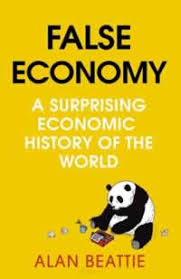
It's chapters are organised around provocative questions such as
It's central thesis is that economic development continues to be impeded in different countries for different historical reasons, even when the original rationale for those impediments no longer obtains. For instance:
The author writes in a very chatty, light-hearted matter which makes the book easy to digest. However it would benefit from a few charts to illustrate some of the many quantitative points put forward, as well as sub-chaptering every few pages to provide natural break-points for the reader. +++++
The author was a member of Britain's V Force, a forerunner of the SAS. Its remit was to harass Japanese lines of command, patrol their occupied territory, carryout sabotage and provide intelligence, with the overall objective of keeping the enemy out of India. Irwin is admirably yet brutally frank, in his descriptions of deathly battles with the Japs, his execution of a prisoner, dodging falling bags of rice dropped by the RAF, or collapsing in floods of tears through accumulated stress, fear and loneliness. He also provides some fascinating insights into the mentality of Japanese soldiery and why it failed against the flexibility and devolved authority of the British. The book amounts to a very human and exhilarating tale. Oh, and Irwin describes the death in 1943 of his colleague my uncle, Major PF Brennan. +++++ Other books here |
||||||||||||||||||||||||||||||||||||||||||||||
|
|
||||||||||||||||||||||||||||||||||||||||||||||
|
After
48
crackling, compelling, captivating games, the new World Champions are,
deservedly,
England get the Silver,
No-one can argue with
Over the competition, |
||||||||||||||||||||||||||||||||||||||||||||||
|
|
||||||||||||||||||||||||||||||||||||||||||||||
|
|